

Something old, something new
Happiness hacks, ChatGPT parental controls, and a back-to-school survival tool

Welcome back to Techno Sapiens! I’m Jacqueline Nesi, a psychology professor and mom of two young kids whose favorite “novel experiences” involve a variety of snacks.
If you like Techno Sapiens, please share it with a friend today!
5 min read
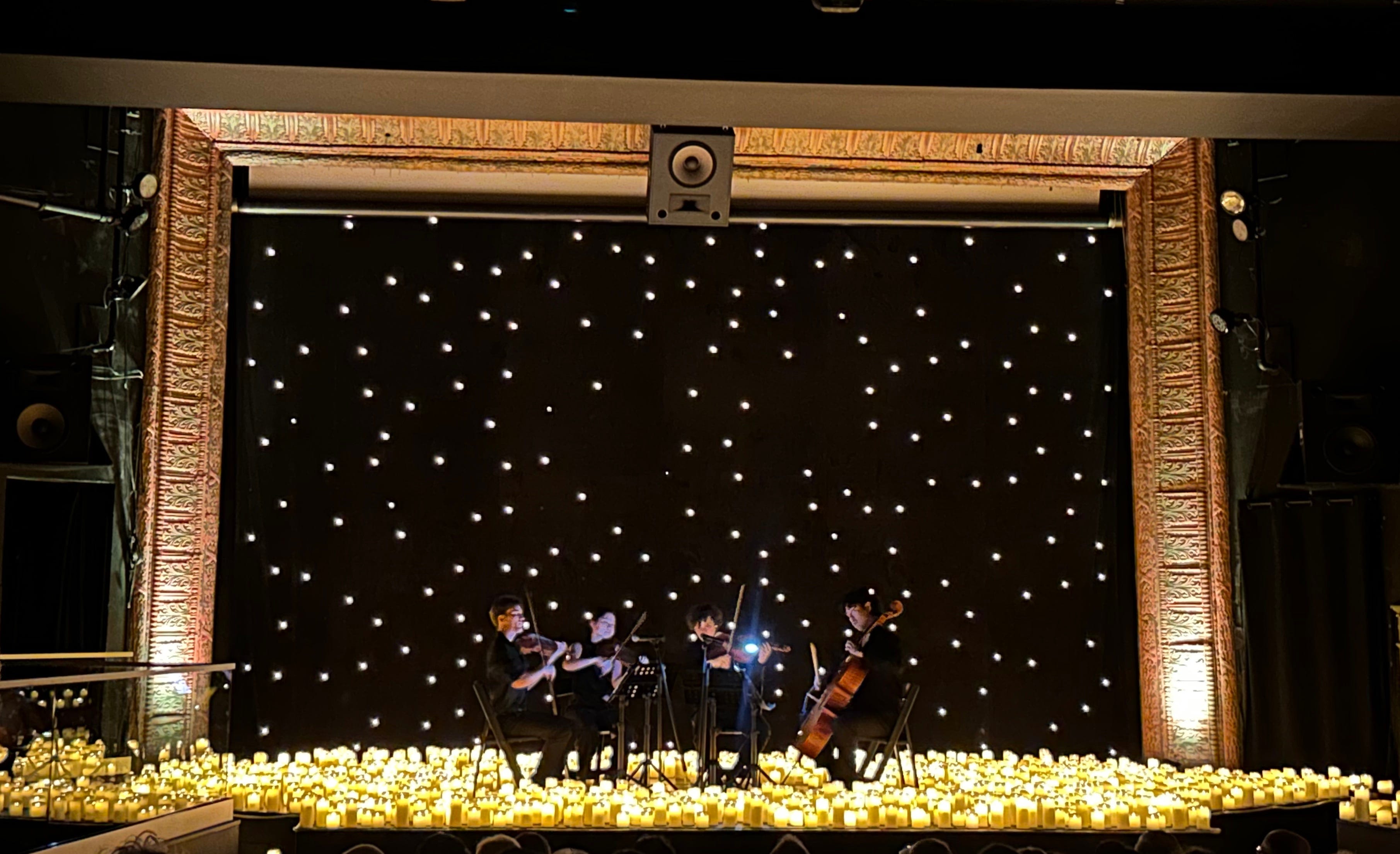
Happy Monday, sapiens! How was your weekend? My husband and I snuck away from our pasta-flinging, somersaulting, dirt-collecting barbarians angel children, and did something a little different. We celebrated our anniversary with a “Candlelight Concert”1: a small theater, hundreds of candles, and a string quartet playing fun arrangements of Beatles songs.
It was the best.
I, a person who is very normal and definitely not a nerdy psychologist, spent a good portion of the concert thinking about the research on novel experiences (in addition, of course, to how much I love my husband). We rarely do this sort of thing, and I found myself reflecting on how great it can be to do something new.
As humans, we tend to fall into a pattern of hedonic adaptation, where we quickly adapt to positive experiences and return to a certain “set point” of happiness. One of the best ways to counteract this tendency? Injecting novel experiences into our everyday lives. One study, for example, finds that simply telling people to treat their weekend “like a vacation” versus “like a regular weekend” results in better moods and greater satisfaction.
Adding variety can go a long way toward increasing happiness: whether that’s visiting a new place, taking the scenic route on a familiar drive, or, of course, sitting in a candlelit room, clapping along with strangers to a viola version of Hey Jude.
So, in the spirit of novelty, today we’ve got a grab bag of news and research from the worlds of parenting and tech.2 Let’s dive in (and, hopefully, feel a little bit happier in the process).
New research: Is self-care actually other-care?
We hear a lot about the benefits of self-care: treating ourselves to a favorite meal, taking time out of the day to relax, or even heading to the spa for a massage. But what if these efforts are misplaced? A new study compares the benefits of acts of “self-kindness” to a different type of kindness: one directed toward others.
Participants were asked to spend two weeks performing three “acts of kindness” per week. The “self-kindness” group was randomly assigned to do those acts for themselves (e.g., a day trip to a favorite hiking spot, a 5-minute break when feeling stressed, engaging in a hobby). The “prosocial” group was assigned to do them for others (e.g., texting a friend just to say hi, dropping off a treat for someone, writing a thank you letter).
While self-kindness did have benefits, those who were kind to others showed the strongest effects on well-being: decreases in depression, anxiety, and loneliness, and increases in feelings of social connection.
The takeaway: Doing good for others is good for us, too. [But also, a spa day wouldn’t hurt, right?!]
A solution to back-to-school scheduling chaos
Remember last week’s slightly panicked chat about back-to-school prep? I heard from many of you that you’re in the same (chaotic, somewhat overwhelmed, struggling to juggle it all) boat. Sapiens: I found a secret weapon.
Duckbill is an executive assistant that blends AI with real humans to check tasks off your list, and they were kind enough to let me test it out. I immediately snapped photos of my kids’ school calendars (paper copies! Why?!) and a few hours later, every event was neatly added to our shared family Google Cal. I’ve also had Duckbill call doctors’ offices and do the whole wait-on-hold-press-1-for-more-options purgatory loop to schedule appointments,3 coordinate school health form pickups, and change addresses. Truly life changing.
The takeaway: I’m teaming up with Duckbill this week to get techno sapiens a special discount (yay!), so use this link (code TECHNOSAPIENS) for 50% off two months.
In the news: ChatGPT to add parental controls
OpenAI announced last week that they’re introducing parental controls for teens using ChatGPT. We don’t know exactly how this will play out, but planned features for parents include:
Linking their account to their teen’s account with an email invitation
Option to disable certain features for teens, like memory or chat history
Notifications if the system detects their teen is in distress
They also plan to default to “age-appropriate model behavior rules,” and to continue prompting app users to take a break during long sessions.
The takeaway: I’m very happy to see OpenAI working to safeguard teens’ experiences on their products, and I think this is definitely a step in the right direction—and I’m proceeding with a healthy dose of skepticism, given past promises we’ve seen from other big tech companies that have fallen short. ChatGPT parental controls go live within the next month, so we’ll have more info soon!
New data: AI is changing the way we search
You’ve likely noticed things have changed recently in your Google search results. In the past, all searches led users to a familiar, ranked list of websites that might address queries like “percent of babies born at 38 weeks” and “four-year-old speaking in animal sounds?”4 Now, in many cases, you’ll see an “AI Overview” at the top of the page.
So, has this changed our searching behavior?
Recent data from the Pew Research Center suggests the answer is yes. When users see an AI overview (versus none), they’re less likely to click any links on the page (8% vs. 15%), and more likely to end the browsing session entirely (26% vs. 16%).
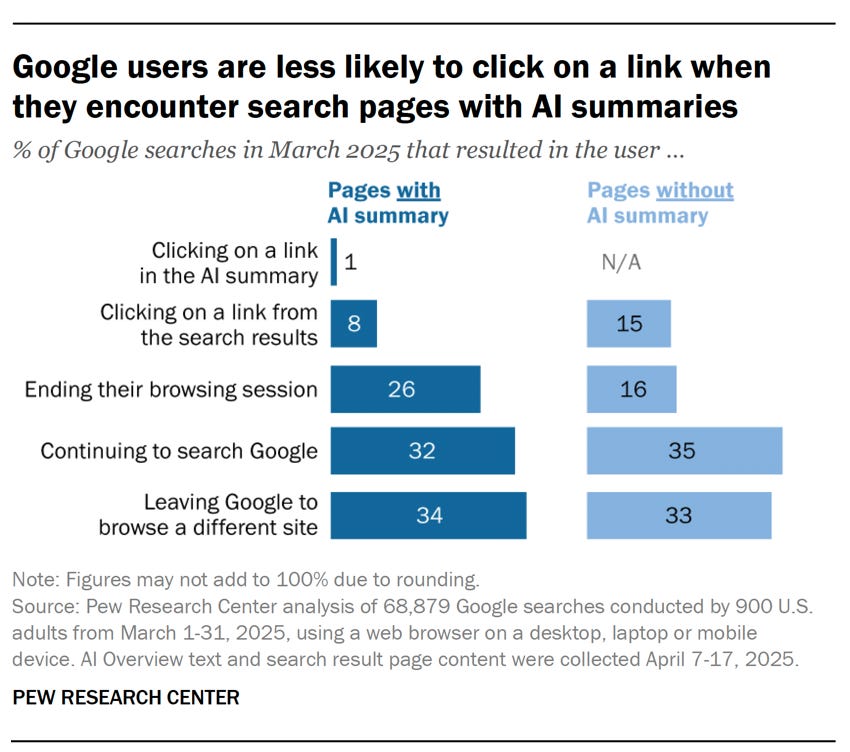
The takeaway: Many of us may have suspected that AI overviews were resulting in decreased browsing time and website clicks, but it’s good to see the data to back it up. Will this make us more efficient searchers? Will it result in more superficial or inaccurate answers? Will we continue to use “Google” as a verb? Time will tell!
A quick survey
What did you think of this week’s Techno Sapiens? Your feedback helps me make this better. Thank you!
The Best | Great | Good | Meh | The Worst
We signed ourselves up for this concert knowing very little about it—but, from what I’m now reading, it appears these “Candlelight Concerts” happen all over the world, and are described as “a fresh spin on classical music performances.” For those in New York City, might I draw your attention to the “Candlelight Tribute to Bad Bunny” happening later this month?
Do we like this “grab bag” format? Want to see more (or less) of it? Feedback? Suggestions? Please let me know!
I recently called my doctor’s office to discover they have switched, without warning, to an AI answering system. As far as I can tell, the way it works is that a woman’s voice answers the phone, gives her name, and generally pretends to be a human before ultimately apologizing and telling you she cannot reschedule your appointment, and transferring you to an actual receptionist. The jig is up AI lady! I’m onto you! (Also, thank God for Duckbill now doing this task for me).
Google’s AI overview tells me the answers to these questions are: “26%” and “A four-year-old speaking in animal sounds is a normal part of language development, often indicating they are learning to associate sounds with objects and are on the path to developing more complex language skills.” There were also tips on how to encourage the speaking-in-animal-sounds behavior. Given my child’s current enthusiasm for quacking, meowing, and barking in situations where words would be both more useful and socially acceptable, this advice is actually the opposite of what I was looking for.
Duckbill asked me for a lot of personal information, without any chance to learn more about it. That is NOT the type of informed experience I expect from this newsletter